
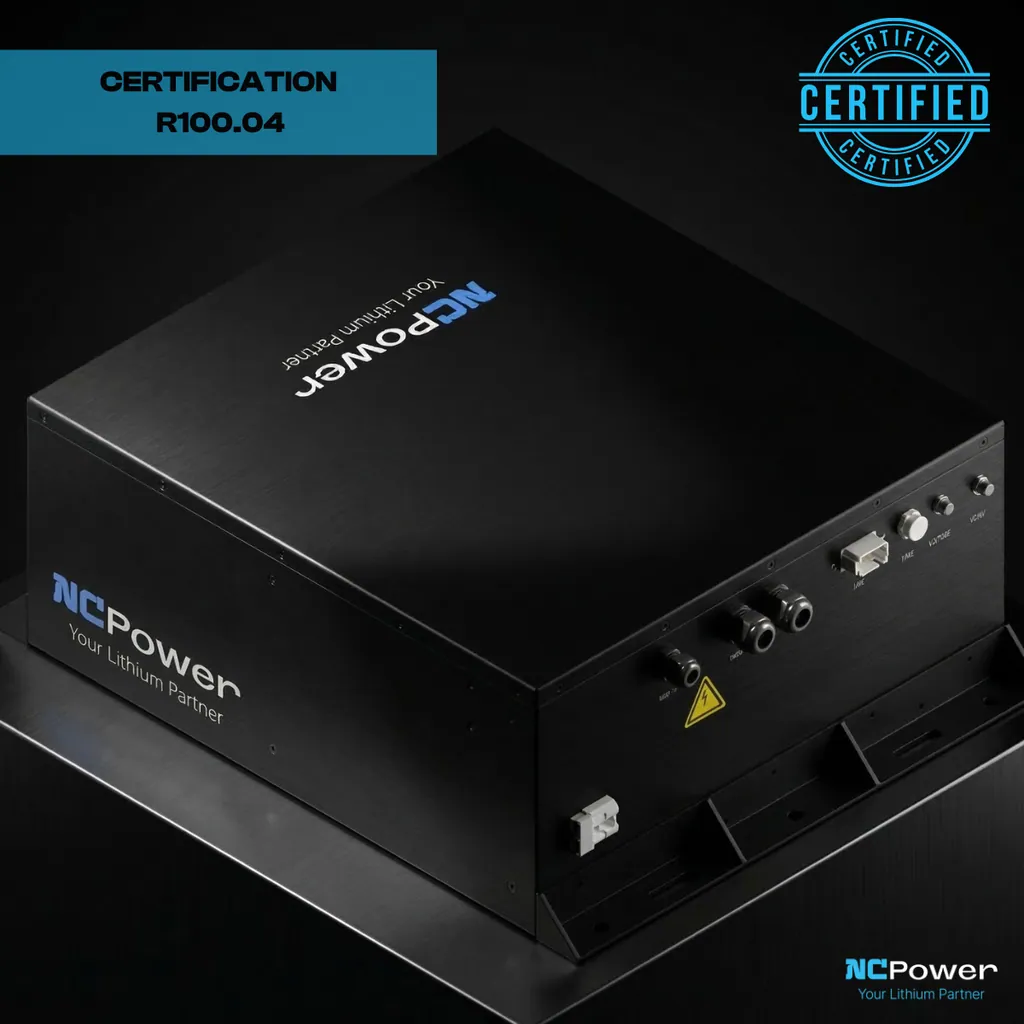
When we talk about electric mobility, we usually focus on autonomy or charging speed. However, for those of us who manufacture lithium batteries, there is one factor that is above all: safety. At NCPower, our NC7718A model already has the official certification of the ECE R100.04 regulation of the United Nations, the most demanding technical review that exists today in the electric mobility sector. We do not do it to comply with a procedure, but because it is the only way to guarantee that our systems respond as they should when things get complicated.
Official source: https://www.boe.es/buscar/doc.php?id=DOUE-L-2021-81768
The standard is not for the battery, but the battery is the key
UN Regulation No. 100 was not written to approve batteries, but to approve complete electric vehicles. But a vehicle is only as safe as its most critical component.
Part II of this regulation focuses on Rechargeable Electric Energy Accumulation Systems (SAEER). In practice, this means that for a last mile light vehicle, van or truck to obtain this certification, its battery must have passed very strict mechanical and electrical safety controls. At NCPower we design each system thinking that the final vehicle passes these tests without problems.
The real objective is that, if a vehicle has an accident or is subjected to extreme use, the battery does not aggravate this situation, posing an extra risk for the occupants or the environment. We want our Partners to have the peace of mind of knowing that they are carrying a product that has been tested and punished in laboratories before reaching their hands.
The exam to pass: eight essays with no margin for error
To comply with this regulation, we take our batteries to specialized laboratories of the Authority for Homologation of the Republic of San Marino, official entity of the State of San Marino in charge of certification and technical approval. There they undergo eight exhaustive tests that simulate the worst possible situations:
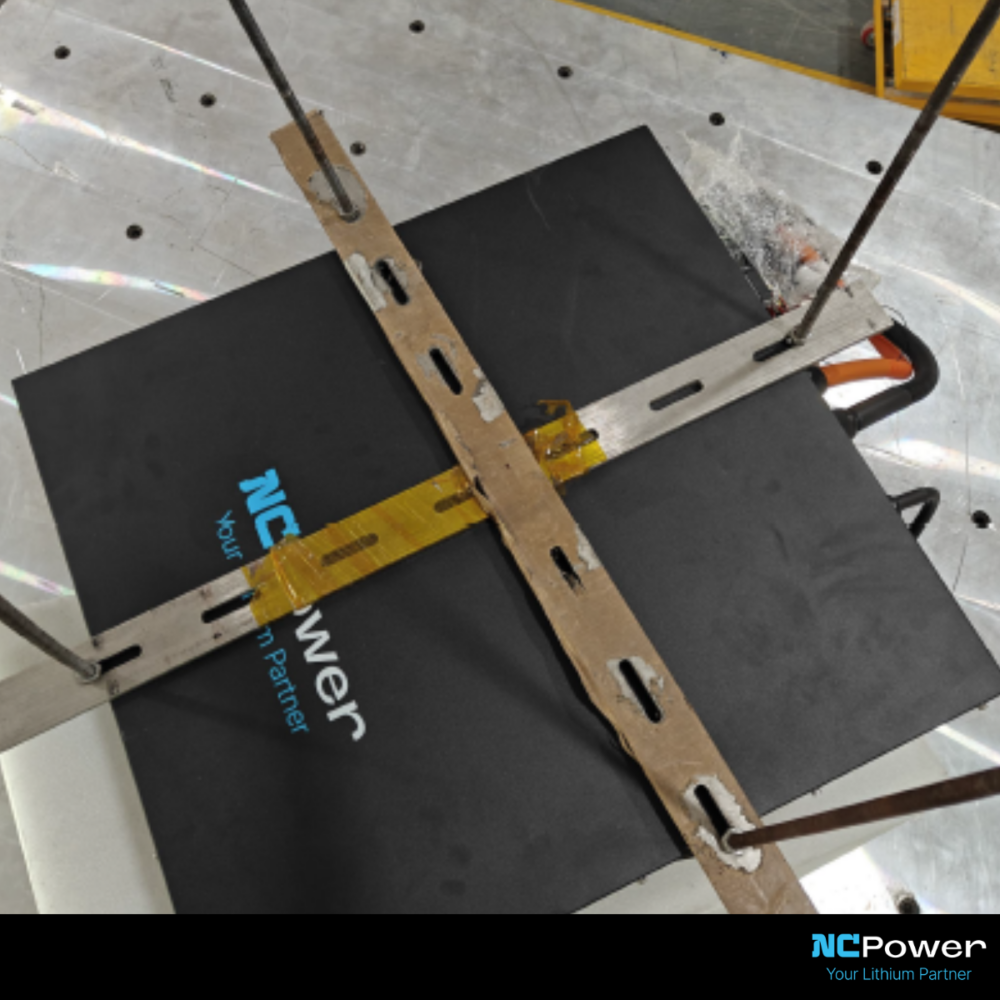
1. Vibration and shock test: It is verified that the structure can withstand the vibrations and mechanical stresses of daily activity without leaks appearing or a fire occurring.
3. Extreme thermal shock test: The battery is subjected to sudden changes in environmental temperature to ensure its resistance to extreme thermal shocks.
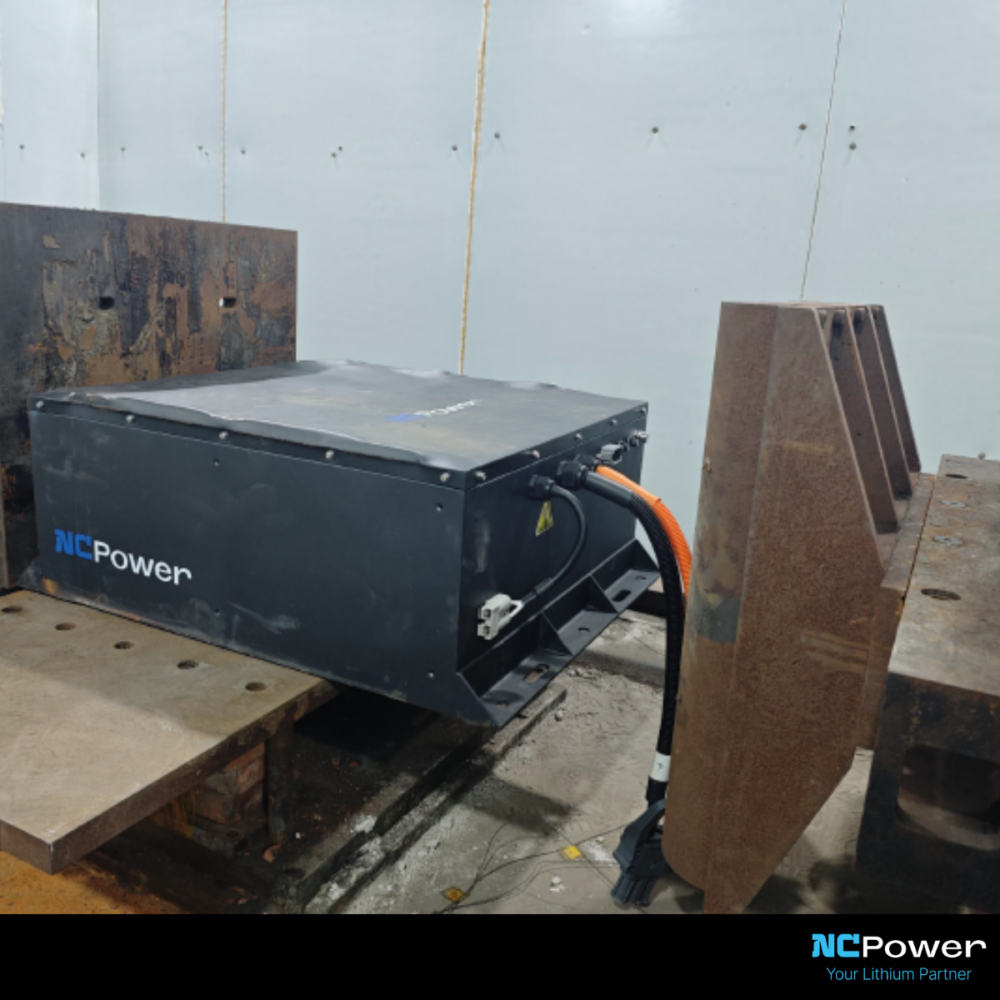
5. High impact mechanical test: The inertial loads that the battery would suffer in the event of a vehicle collision are simulated.
7. Mechanical integration test: The structural integrity of the battery and its physical behavior under pressure or crushing stress are verified.9. Fire resistance test: The battery must withstand direct exposure to external flames, maintaining its integrity long enough to allow the safe evacuation of the occupants.
11. External short circuit test: It verifies that the system is capable of interrupting the current and avoiding serious damage in the event of an electrical failure outside the battery.
13. Overcharge and discharge protection test: The electronics are tested to confirm that the system stops the charging or discharging process before reaching levels that compromise the cell chemistry.
15. Overheat Protection Test: The effectiveness of the thermal management system in preventing dangerous elevations in internal temperature is confirmed.
We not only protect the prototype: the COP certificate
It is relatively easy to make a perfect unit so that it passes a test. The difficult thing is that the number 500 is exactly the same. For this reason, at NCPower we not only have the approval of the model, but it is a necessity to have the Certificate of Conformity of Production (COP), granted by the Authority for Homologation of the Republic of San Marino, already having the E57 seal.
This means that the authorities audit our factory periodically. The COP is official proof that our manufacturing processes are stable and that each battery that leaves our production line has the same quality and safety as the one that passed the tests in San Marino.
Scope of the regulations: Categories M and N
The R100.04 regulation applies to a wide variety of electric vehicles. Specifically, it regulates categories M (vehicles intended for the transportation of people, from cars to buses) and N (vehicles for the transportation of goods such as vans and trucks, as well as light last mile vehicles).
Safety and quality as constant evolution, not as novelty
For us, security is not something we have discovered now. We have been certifying our systems under the previous revisions for years, since R100.02. Moving to R100.04 is simply the step we had to take to continue betting on quality as the main value of our product.
If you have any questions about our products, the certification process or how we can collaborate on your next project, contact us. Our team will be happy to assist you and resolve any technical issue.
Contact us