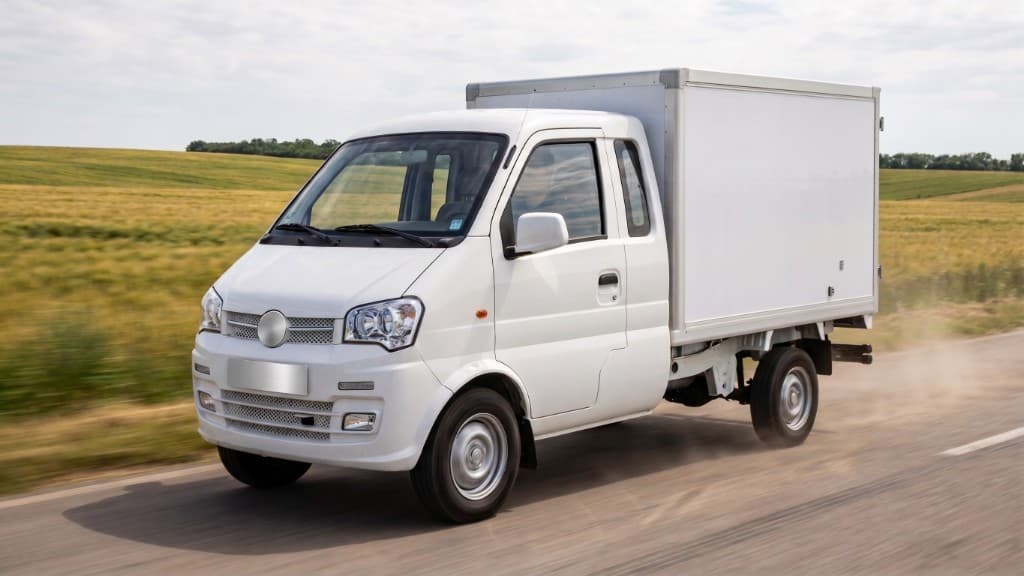
Light commercial vehicles (LCV)
Compact battery systems for urban delivery operations with demanding current peaks and high daily uptime.

Low Speed Vehicles
Solution for OEMs and integrators that need up to 3C discharge peaks without compromising safety or service life.
The shift to lithium in LSV starts by understanding your operation.
LSV Applications
Each vehicle has different mechanical, electrical and integration requirements. We design the exact battery for each vehicle.
Compact battery systems for urban delivery operations with demanding current peaks and high daily uptime.
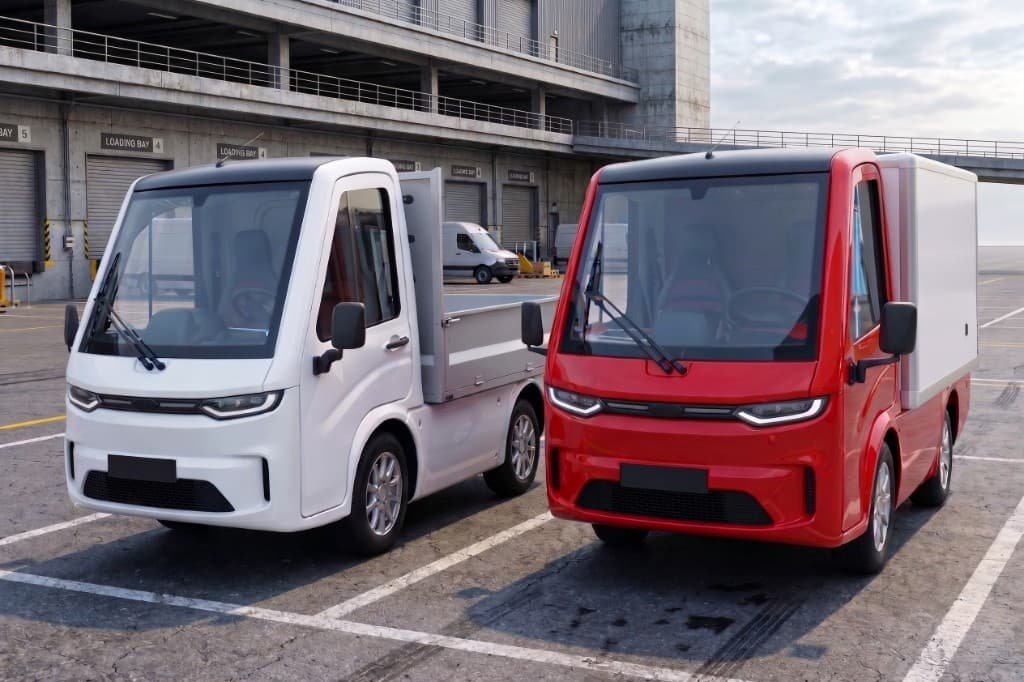
Electrical configurations optimized for frequent routes, stop-and-go cycles and efficient charging windows.

Custom batteries for light mobility vehicles that require stable power in compact formats.
Compact battery systems for urban delivery operations with demanding current peaks and high daily uptime.
Electrical configurations optimized for frequent routes, stop-and-go cycles and efficient charging windows.
Custom batteries for light mobility vehicles that require stable power in compact formats.
The LSV challenge
Light commercial vehicles combine compact batteries with high current peaks. In that context, generic BMS designs reach their limits.
NCPower System
NCPower System combines proprietary BMS, advanced balancing and layered safety to solve real-world light vehicle challenges.
Current does not pass through the control board. Contactor-based architecture removes the practical current ceiling of MOSFET BMS and reduces thermal risk.
Result: reliable operation in applications with 3C+ peaks
See in depthBalancing works in both charge and discharge, with multichannel architecture and external dissipation to avoid BMS overheating.
Result: up to 40% lower charging time and higher availability
See in depthIncludes 3 alarm levels, isolation tests, discharge lock during charging and continuous thermal monitoring for road and industrial operation.
Result: functional safety aligned with OEM and integrator requirements
See in depthIn-house manufacturing
Full process control: Grade A cells, laser welding, unit-level testing and European manufacturing with complete regulatory compliance.
 Preventive monitoring and personalized support
 Laser welding for maximum precision and low resistance
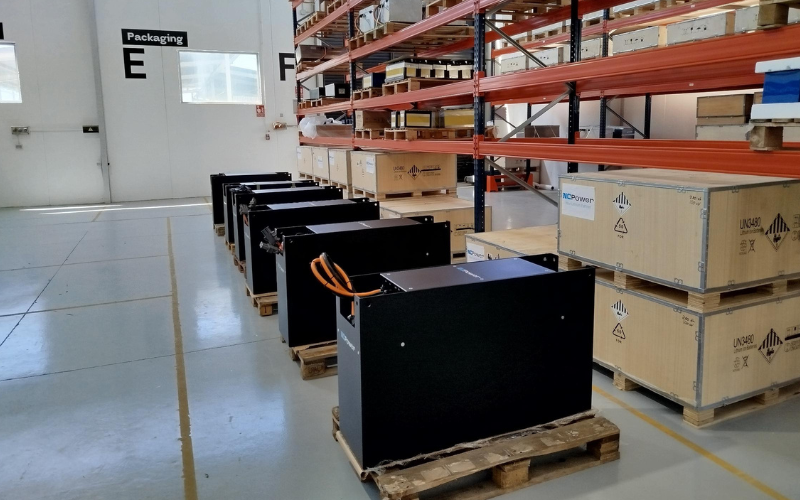 Final product validated unit by unit
Cloud data center
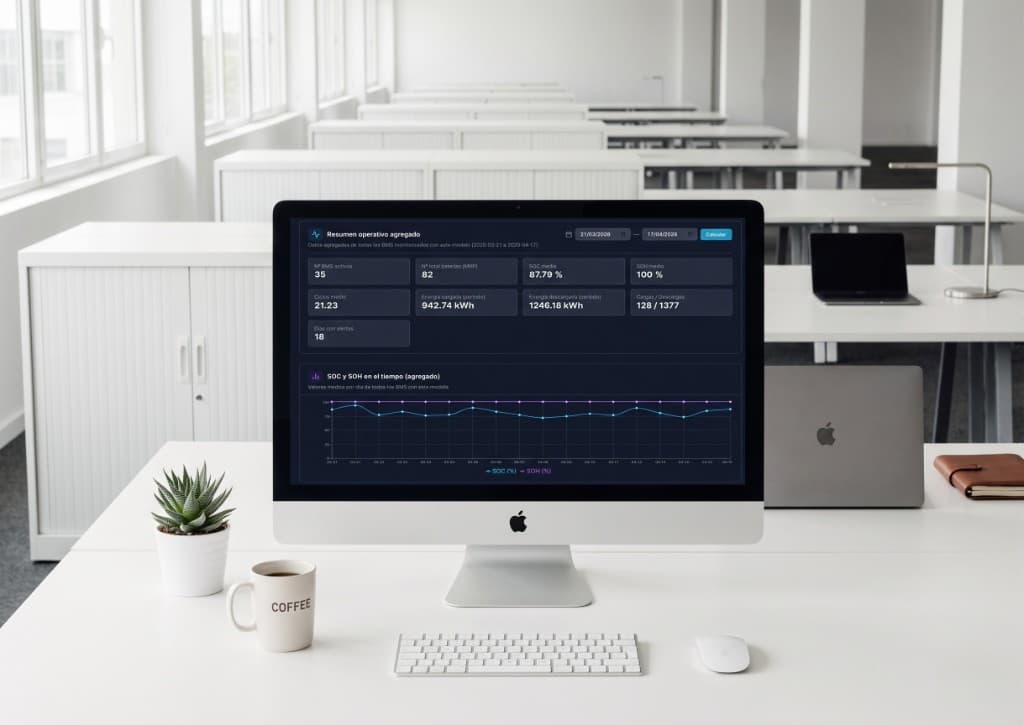
From battery telemetry to operational decisions: connected data to reduce incidents and sustain operational availability
Connect telemetry, maintenance and operations in a single decision layer to anticipate incidents, prioritize actions and sustain fleet availability.


Work process
A closed technical workflow to accelerate integration, reduce risk and secure performance in operation.
We define operational needs, value targets and technical scope for each customer use case.
Technical alignment from day one
Technical proposal with 3D modeling, component selection and electrical architecture definition.
Custom engineering, not a catalog fit
Assembly, wiring and tuning of a functional prototype to validate architecture and electrical behavior.
We validate before scaling production.
Quality, safety and integration verification under real operating conditions.
Real-world validation, not only lab tests.
Relevant certifications
Technical documentation available on request for OEMs, integrators and fleet operators.
 European Conformity
 ECE R100.04 Electric Vehicles
 ECE R10.07
 ISO 9001 Quality ManagementISO 14001 Environmental Management
Frequently asked questions
Direct answers about electrical architecture, safety, homologation and integration for light vehicle manufacturers.
Because light vehicles combine compact batteries with high discharge peaks. A stand-alone BMS decouples control electronics from the power path and reduces thermal risk.
It corrects imbalances without excessively extending charging windows. The result is higher availability and fewer stops caused by virtual undervoltage.
Yes. NCPower customizes in three layers: mechanical, electrical and firmware/communications to integrate the battery with each vehicle and controller.
ECE R100.02 is a key reference for electric vehicle homologation. We also work with CE, ISO 9001 and ISO 14001.
Our service model includes direct technical response in under 24 hours, without intermediaries for firmware changes or support.
Contact
Share your technical context and receive a clear, viable engineering proposal aligned with your industrial roadmap.