
Traction Batteries
Traction batteries for towing equipment, cargo transport and ramp service vehicles under intensive duty cycles.

Ground Support Equipment
Certified safety, operational continuity and modularity for every ground equipment type. Designed to maximise availability in airport environments.
The shift to lithium starts by understanding your operation.
GSE Applications
Each airport unit has different mechanical, electrical and integration requirements. We design the right battery for each one.
Traction batteries for towing equipment, cargo transport and ramp service vehicles under intensive duty cycles.
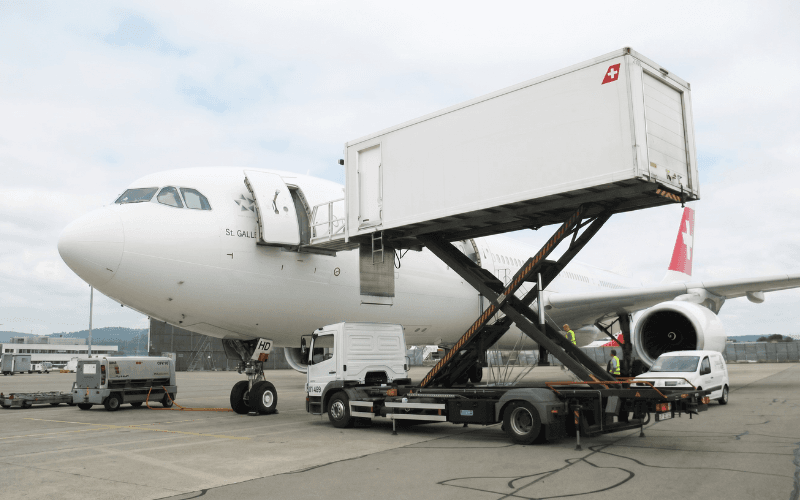
Auxiliary batteries for lifting, climate and support systems, optimized for intermittent usage profiles.
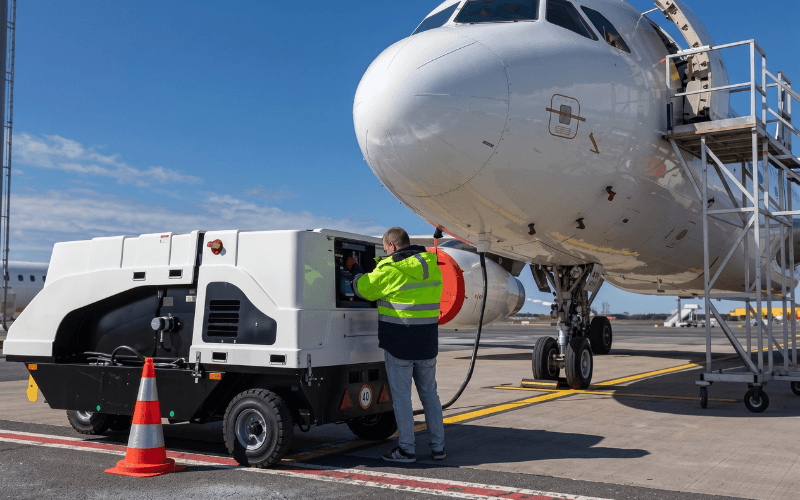
Ground power units for aircraft supply during turnaround, with high capacity and advanced thermal management.

Pushback batteries for extreme current peaks, using stand-alone BMS architecture for high-power discharge stability.
Traction batteries for towing equipment, cargo transport and ramp service vehicles under intensive duty cycles.
Auxiliary batteries for lifting, climate and support systems, optimized for intermittent usage profiles.
Ground power units for aircraft supply during turnaround, with high capacity and advanced thermal management.
Pushback batteries for extreme current peaks, using stand-alone BMS architecture for high-power discharge stability.
The GSE challenge
In airport environments, every minute of downtime has a direct cost. Generic BMS solutions are not designed for ground-operation demands.
NCPower System
NCPower System combines hardware, algorithms and communications into one intelligent control ecosystem for industrial operation.
Cell balancing works in both charge and discharge, avoiding unnecessary charging extensions through multichannel external balancers.
Result: up to 40% less charging time
See in depthEnergy dissipation occurs in external balancers, not in the BMS board, with per-cell thermal sensing for continuous control.
Result: +30% BMS life cycles
See in depth100% proprietary firmware with independent CAN channels, multi-level safety alarms, isolation tests and cloud telemetry via integrated SIM.
Result: faster integration and direct support
See in depthIn-house manufacturing
We manufacture each battery in-house with full process control, from cell selection to final testing.
 Preventive monitoring and personalized support
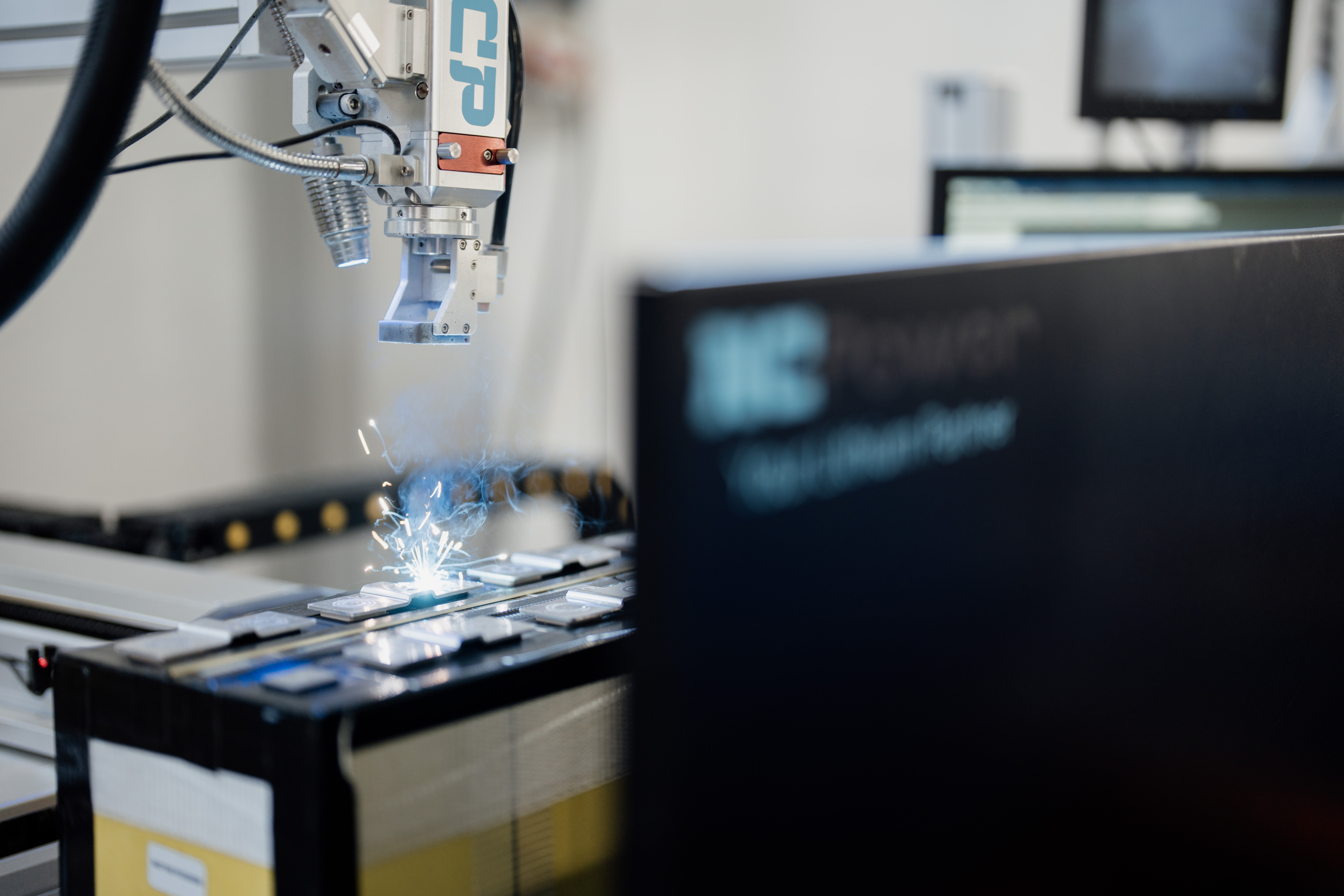 Soldadura láser - única en España para baterías
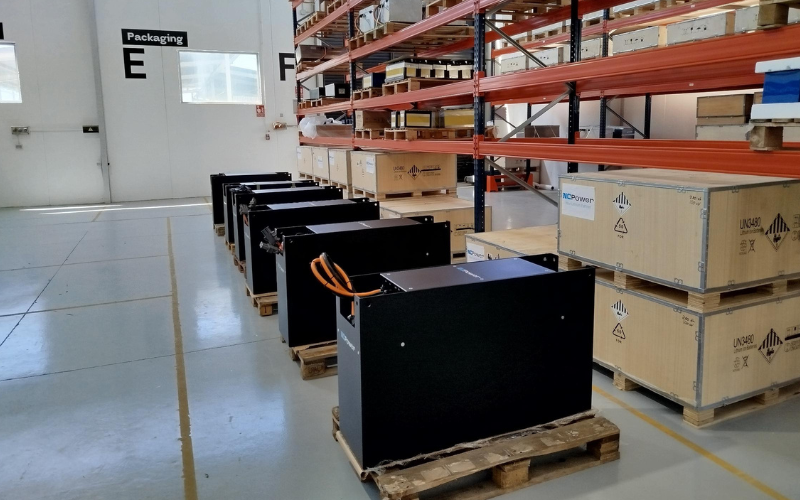 Producto terminado - control de calidad individual
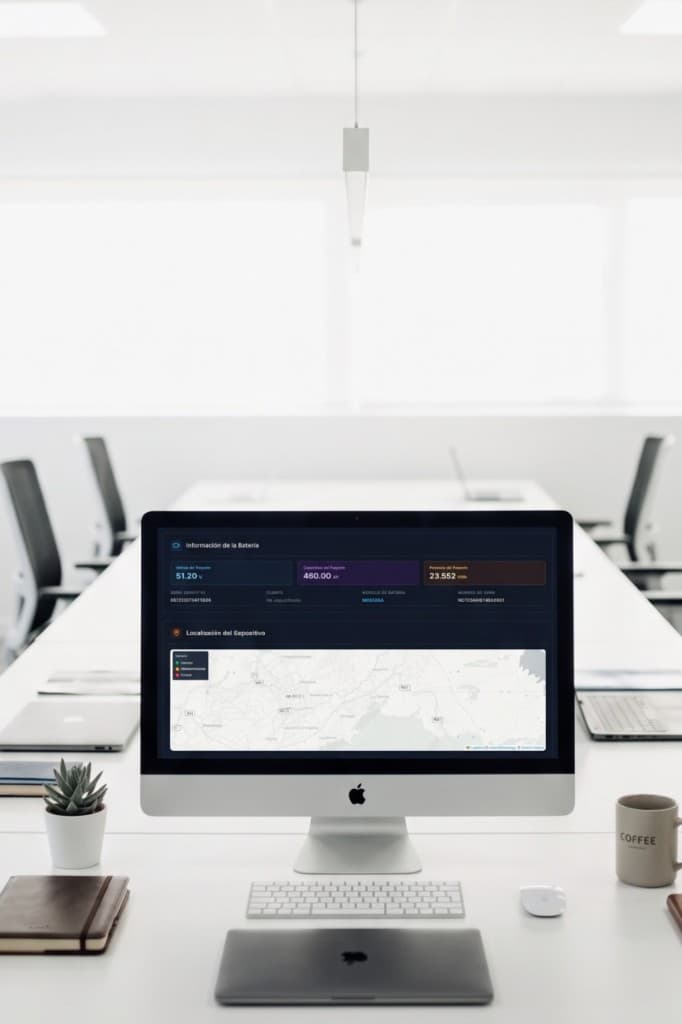
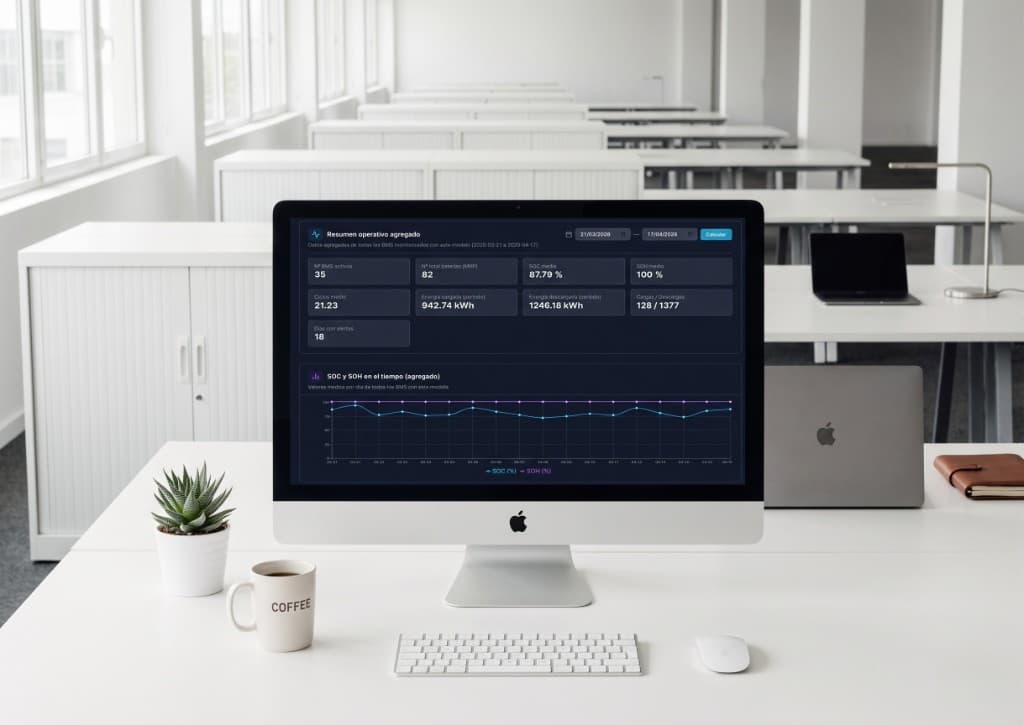
Cloud data center
From battery telemetry to operational decisions: connected data to reduce incidents and sustain operational availability
Connect telemetry, maintenance and operations in a single decision layer to anticipate incidents, prioritize actions and sustain fleet availability.

Compliance
Complete technical documentation available on request for each certification and application context.
 Conformidad Europea
 UNE-EN IEC 62619Ensayos EMC EN 61000
 ISO 9001 Gestión de CalidadISO 14001 Gestión Ambiental
Work process
A closed technical workflow to accelerate integration, reduce risk and secure in-operation performance.
We define needs, expected benefits and technical scope for each operation.
Technical alignment from the start
Technical proposal with 3D modeling, component selection and electrical architecture.
Custom engineering, not catalog fitting
Assembly, wiring and tuning of a functional prototype to validate architecture and behavior.
We validate before scaling production.
Quality, safety and integration checks under real operating conditions.
Real-world validation, not only lab tests.
Frequently asked questions
Direct answers on integration, functional safety, certifications and continuous operation in airport environments.
NCPower BMS includes 3 independent CAN channels and RS-485 support. As an in-house platform, we adapt protocols directly to each equipment control architecture.
The BMS implements 3 alarm levels, electrical isolation testing, discharge lock during charging, and continuous thermal monitoring with per-cell NTC sensing.
Because balancing operates in both charge and discharge with multichannel architecture acting on multiple cells simultaneously.
We work with CE, UN38.3, ECE R100.02, ISO 16750, ISO 9001 and ISO 14001, with project-specific technical documentation available on request.
Our batteries are designed for intensive operation and include up to 10-year coverage depending on use profile.
Yes. The integrated SIM sends real-time data to the NCPower Cloud Data Center for preventive maintenance and anomaly detection.
Contact
Share your airport fleet context and receive a concrete technical proposal to improve availability, safety and operating cost.