
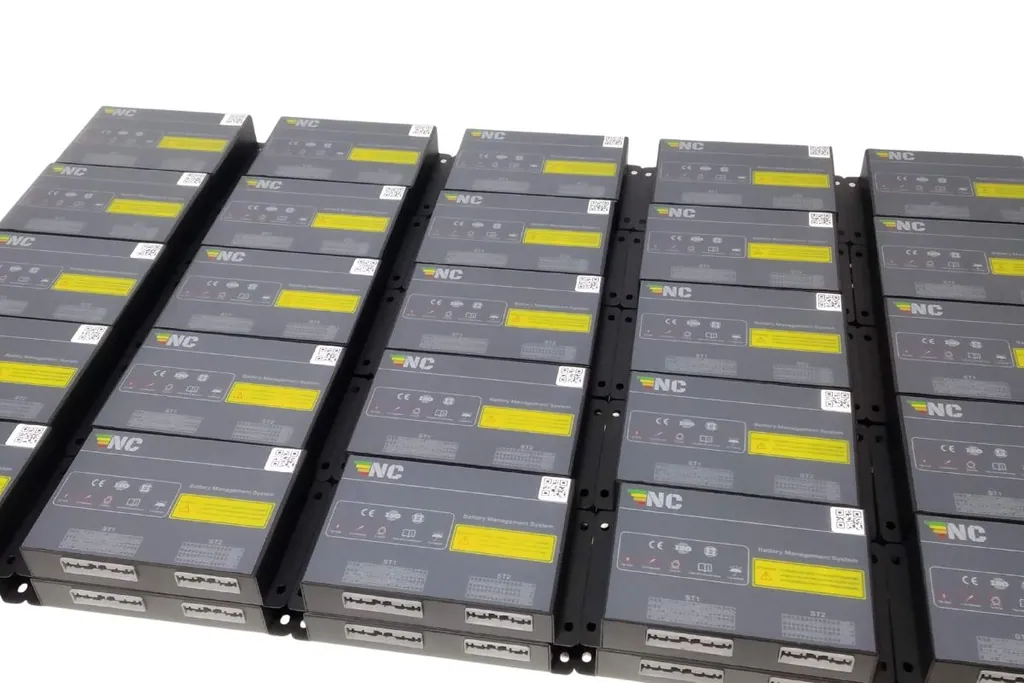
As in many other areas, the use of large volumes of information and data analysis presents new possibilities for the battery industry. This implies that these solutions can be leveraged to advance more rapidly in the development of technologies and improve battery efficiency, in order to overcome the challenges faced by the energy storage industry, especially in the context of electric vehicles.
What is BMS exactly?
Battery management systems (BMS) are a critical tool for maximizing overall battery performance.
For several reasons:
- They offer detailed information
- Allow adequate monitoring throughout its useful life
In addition, they offer the possibility of optimizing key aspects such as:
- Energy density
- Charge/discharge rate (c-rate)
- Cycling capacity
- Temperature
- Geometry
Benefits of using BMS in lithium batteries
Detailed analysis of the collected data makes it possible to identify patterns and trends in battery performance. This makes it easy to optimize its performance, whether by adjusting loading and unloading parameters, modifying geometry or implementing more efficient management strategies.
Data analysis on batteries also plays a crucial role in traceability of their entire life cycle. It allows relevant information to be tracked and recorded at every stage, from manufacturing to use and eventual recycling of the battery.
This affects different phases:
- Battery manufacturing
- Distribution and logistics
- Usage and performance
- Maintenance and service
- Recycling and useful life management
The knowledge gained through data analysis and research allows key areas for battery improvement to be identified.
This may include:
- Research into new materials
- Optimization of the structure and geometry of the batteries
- The design of new, more advanced battery management systems
On the other hand, modeling and simulation techniques can be used to design optimized batteries from the beginning.
This involves taking into account factors such as:
- Energy density
- Efficiency
- Fast charging capability
- Useful life
- Security
Instead of performing extensive testing on physical prototypes, models can be used to evaluate and select the best design options. This helps reduce costs and time. It is also a way to guarantee its performance and quality.Furthermore, it is thus possible to adapt its configuration and composition to meet the specific needs of different applications. For example, batteries with optimal characteristics can be developed for electric vehicles.
Finally, by better understanding the health and performance of batteries through data analysis, we can identify which batteries still have remaining capacity and life to be used in other applications.
By giving batteries a second life, premature disposal is avoided and waste generation is reduced. This has a positive impact on the environment, since the value of the materials is maximized and the need to produce new batteries is reduced.
On the other hand, it also has important economic benefits, and favors greater flexibility and adaptability.
BMS challenges to achieve this model
To achieve the aforementioned benefits, the first thing is to understand and address the fact that the industry presents two major challenges.
The first challenge is to develop battery management systems (BMS) that are capable of capturing and exploiting information effectively. A BMS is an electronic system that collects and monitors key data about the operation and life of batteries.
The BMS is an essential component present in all batteries to ensure their safe and efficient operation. However, it is necessary to incorporate software solutions that go beyond its current functionality.
This involves turning the BMS into a “brain” that not only manages information, but also understands and uses it optimally. To achieve this, the development of new technologies that allow advanced data management and analysis is required.
The second challenge is related to the need to develop advanced BMS capable of adapting to any generation of batteries. As energy storage technology advances, new generations of batteries are introduced with different characteristics and requirements.
As energy storage technology advances, new generations of batteries with diverse configurations, chemistries, and approaches are being introduced. BMS systems must keep pace with this evolution and be able to adapt to these new technologies. This involves developing flexible and modular solutions that can be updated or reconfigured according to the specific characteristics of each battery generation.
In this way, more efficient and precise management of the batteries will be achieved throughout their life cycle.
ConclusionIn short, thanks to the potential of big data and data analytics, batteries can benefit from improvements in their performance, lifespan and safety. This integration between the battery sector and digital technology with the battery BMS not only contributes to the energy transition and sustainability, but also has a positive impact on our society and environment.
Moving in this direction opens up new possibilities for the future of batteries and drives technological development in general.