

Lithium batteries have revolutionized the electric vehicle industry, providing a powerful and efficient energy source. However, to maximize its performance and durability, it is essential to have an effective battery management system or BMS.
At NCPOWER, leaders in the development of lithium batteries for electric vehicles, BMS design and implementation are critical aspects of our approach to excellence.
Battery Design
When we talk about an electric car battery, we are actually referring to a set of many battery cells connected together. These cells are grouped into battery modules, and then these modules are connected to a “battery pack” or what we commonly call "the battery."
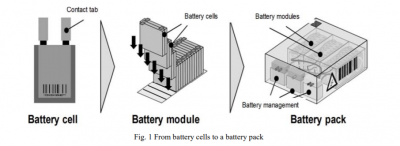
This structure in cells, modules and battery packs allows us to achieve the capacity and energy necessary for the operation of the electric vehicle. In addition, it facilitates its manufacturing, installation, inspection and maintenance. Each manufacturer may have their own design and use different chemicals in the battery cells, but generally, they are all lithium batteries, which is the most advanced technology currently available.
Lithium batteries are sensitive to temperature changes, overcharging or excessive discharge. To maximize its lifespan, it is crucial to carefully monitor and control these conditions. It is also important to avoid temperature leaks, which can occur if the battery is charged or discharged too quickly. To ensure safe and optimal operation, it is necessary to keep the battery within what is known as the "Safe Operating Area."
This involves keeping the battery temperature between -5 and 45°C, the voltage between 2 and 4 volts, and the current between 0 and 1 amp. Careful monitoring is essential to ensure that the battery is always within this safe area of operation.
Each of these construction stages requires a meticulous quality process to ensure optimal performance and long battery life. At NCPOWER, we pride ourselves on using cutting-edge technologies and following strict manufacturing standards every step of the process.
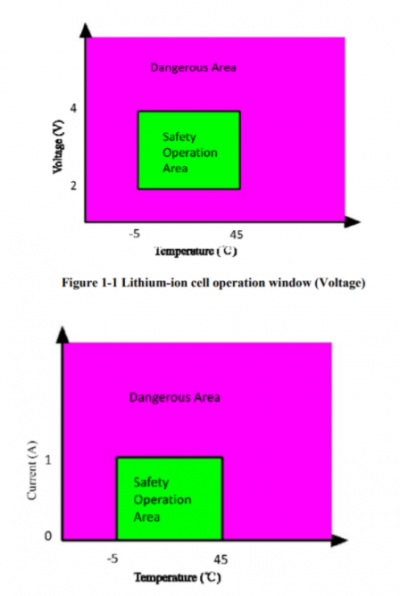
_Note: Safe operation area in lithium battery manufacturing at NCPOWER_
The BMS and its design
The heart of an efficient and safe battery system lies in the BMS. This system is made up of several essential components, including:
- The battery monitoring integrated circuit (BMIC)
- The cell management controller (CMC)
- The Battery Management Controller (BMC)The BMIC is responsible for monitoring the individual battery cells and must be able to quickly inform the CMC of any unfavorable situations. The speed of communication between the BMIC, CMC and BMC is crucial as it allows an immediate response to correct any problems, such as overheating of a cell. Measurement accuracy and responsiveness to adverse conditions largely depend on the frequency of communication between these components.
However, designing an effective communication network in an electric car can be challenging due to the electrical noise present. Establishing reliable and accurate communication between the BMIC, CMC and BMC is necessary to ensure efficient monitoring and control.
In addition to these components, the BMS also includes load balancing circuits to ensure that all cells work in a balanced manner and avoid problems. Load balancing is essential to prevent unfavorable situations. The BMS strives to prevent problems from occurring, but will take corrective action if necessary.
Depending on the complexity of the electric car, various intelligent microcontrollers can be added to monitor and control specific tasks. It is important that the BMS has the ability to monitor both the battery and its own operation, and distinguish between real and false alarms.
At NCPOWER, we strive to implement efficient and reliable load balancing strategies, always seeking to achieve the optimal balance between efficiency, cost and reliability.
In the field of BMS, research and development continues to advance steadily. Accurately determining battery state of charge and health remains a challenge due to the complexity and variability of the factors involved. At NCPOWER, to address this complexity, we use what we call the Data Center or remote control of NCPOWER batteries, through computational models and sophisticated algorithms we accurately estimate, monitor and predict the optimal quantities in cell balancing.
Conclusion
In conclusion, BMS plays a crucial role in the performance and safety of lithium batteries in electric vehicles. Its ability to monitor charge and discharge, determine the state of charge and health of the battery, balance charge between cells, and record and communicate data is critical for optimal performance.
At NCPOWER, we are proud to lead the way toward a more sustainable and efficient future in the electric vehicle industry through our innovative battery and BMS designs.