
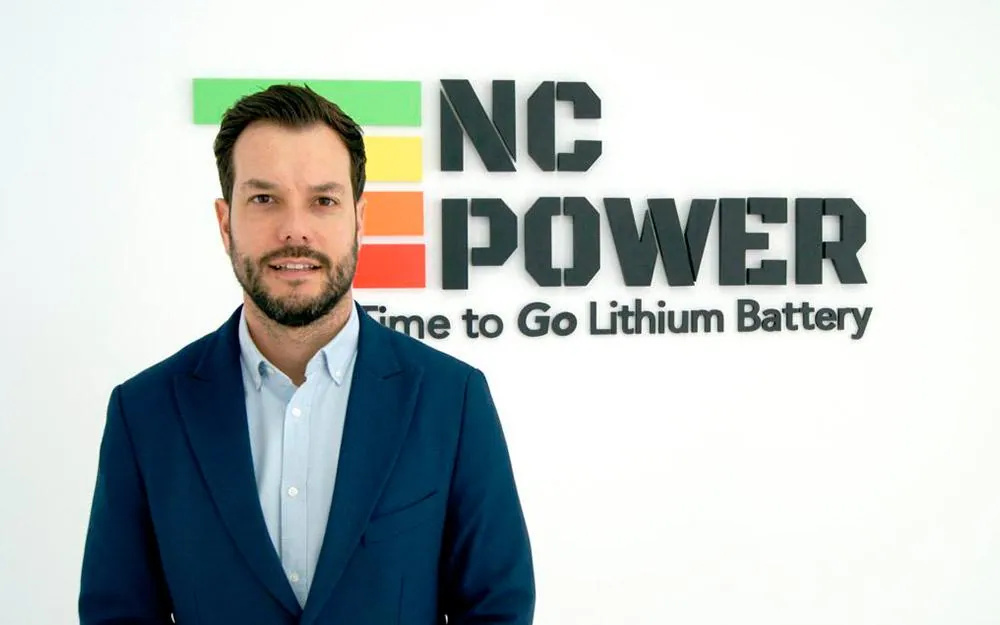
NCPOWER is a Spanish manufacturer of batteries for electric vehicles that has made a solid commitment to sustainability, making it the center of its business strategy. Since its founding in 2019, it has managed to develop innovative technologies aimed at reducing the environmental impact of the growing demand for energy storage systems for electric mobility.[](__NCP_TOKEN_0__)

Mario Nicolás, CEO and founder of NCPOWER.
The electrification of transport has become a key element to achieve sustainable mobility and is advancing in leaps and bounds. According to data managed by the Spanish manufacturer NCPOWER, global demand for batteries for electric vehicles will reach almost 3.5 GWh in 2030, 15 times more than today. As part of the European Mobility Week, Soziable has interviewed Mario Nicolás, CEO and founder of the company, who summarizes the main challenges facing the development of sustainable energy storage solutions.
What technological innovations do NCPOWER batteries incorporate and what features differentiate them from other options on the market?
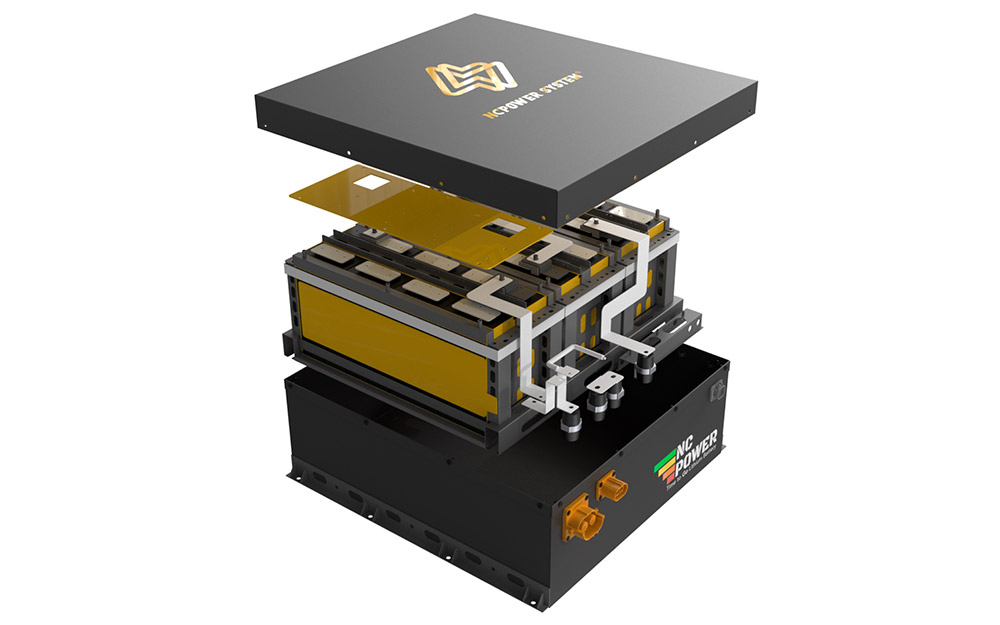
We have developed our own technology, the NCPOWER System. It is a battery management system (BMS) that offers competitive advantages in the performance, productivity and energy savings of the batteries, prolonging their useful life while allowing greater sustainability and greater energy and economic savings.
It is a system that is configured according to the application and characteristics of the device and is customized according to the needs of each client, which increases performance and extends the useful life of the battery with more recharge cycles. Our system allows remote monitoring of all the parameters of each battery, offers an alert system and collects all data related to its actual operation.
"Our technology allows for greater sustainability and greater energy and economic savings."
Most companies in the sector present themselves as assemblers in the production of lithium batteries, placing emphasis on their products or their assembly processes. However, NCPOWER is a battery manufacturer with its own technology. Our strong technological linkage and the differential characteristics of our own battery management system (BMS) and the high customization of our solutions give us an exclusive and clearly differentiating advantage.
What type of clients are NCPOWER systems aimed at?Our target audience is manufacturers of electric vehicles, specifically low-intensity light commercial vehicles for the transportation of goods (pickups, vans, etc.) and utility vehicles designed to move over all types of terrain.
We are currently developing a new production line that will cover industrial energy storage needs.
Our technology is present on three continents and in more than 12 countries around the world such as Portugal, Netherlands, Costa Rica, Jamaica, Mexico, Germany, France, England, Sweden, Norway and Finland.
“Most of the raw materials for current rechargeable batteries are classified as critical”
What are the main challenges in the development and manufacturing of batteries for electric vehicles?
The International Energy Agency predicts a global growth in the number of electric vehicles of 36% annually, reaching 245 million vehicles in 2030. This rapid growth in demand is driving the manufacturing of batteries and with this we are presented with numerous challenges, such as the chemistry or raw materials used in batteries.
"The International Energy Agency forecasts global growth in the number of electric vehicles of 36% annually."
Most of the raw materials for today's rechargeable batteries are classified as critical (CRM) or are located in geopolitically compromised areas outside Europe. Therefore, efficient recycling strategies must be urgently developed to recover and reuse most materials and components, particularly critical ones.
Furthermore, as there are currently very few recycling centers in Europe, the most expensive part of recycling is transporting batteries to these centers and therefore many new centers should be created.
"Recycling of lithium-ion batteries is expected to ensure the supply of raw materials."
Recycling of lithium-ion batteries is expected to secure the supply of raw materials. In the face of such shortages, new chemistries and materials continue to be tested. However, the level of technological readiness of these technologies is low and the new chemicals are still in the laboratory development phase.
On the other hand, the extraction of non-renewable natural resources has a negative impact on our environment. Sustainable battery design, reliable and responsible sourcing of raw materials and the entire battery production process must consider the environmental and social impact: from raw material extraction and waste treatment to battery disposal and recycling.Once the battery has been declared unfit for use in its primary application, regulations are needed to promote and encourage battery reuse. For example, recycling lithium-ion batteries currently used in electric vehicles offers an excellent opportunity for companies to use the refined constituent materials to manufacture batteries to be used for energy storage systems (ESS).
“There are very few recycling centers in Europe, the most expensive part of recycling is transporting batteries to these centers”
How does NCPOWER face these challenges?
We have leaned towards the manufacture of LifePo4 lithium batteries due to their excellent energy performance and high safety. A LifePo4 battery has a much longer life, approximately 5,000 cycles.
Currently NCPOWER has the 'Battery Passport'. That is, in addition to the traceability of each battery component, our manuals include instructions in terms of handling and disassembly procedures, battery management system (BMS) algorithms, life cycle assessment (LCA) data, monitoring of charges, discharges and health status of each battery, etc. In this way, we have control over the status of each battery and can optimize its performance. The 'Battery Passport' allows us to access the health status, residual useful life and governance mechanisms of any battery, to identify the most appropriate second life opportunities.
What measures does NCPOWER take to reduce the environmental impact of its batteries?
Since our founding in 2019, NCPOWER has directed its efforts towards fully green innovation, providing the light electric vehicle market with more sustainable lithium batteries.
Electrification implies zero emissions and represents an important path for the energy transition that many manufacturers are adopting by abandoning polluting fossil fuel sources. For NCPOWER, product design is fundamental in this direction.
In addition to the NCPOWER System's own technology, thanks to the NCPOWER Data Center we can collect and store detailed information about the use and performance of the lithium battery, while monitoring its health status accurately and at any time. Likewise, BMS technology allows us to anticipate potential risks, damages, needs for greater power and even future optimization of battery performance."Electrification implies zero emissions and represents an important path for the energy transition"
What do you think about environmental legislation in relation to batteries for electric vehicles? What aspects do you think should be improved?
The objective of the new regulation is to promote technological progress in the battery sector and minimize the impact that its production has on the environment. To achieve this objective, a series of specific requirements, measures and activities have been introduced that must be met by operators introducing any type of battery on the EU market.
The European Union has set an important new objective for the coming decades: promoting the circular economy, the sustainability of products and processes, and supporting Europe's technological progress in the battery sector. To this end, it has decided to introduce the new so-called EU Battery Regulation and give a clear direction towards a regulatory framework for batteries in Europe that can guarantee the sustainability of the entire value chain in the long term.
For the first time, the new requirements aim to cover the entire life cycle of lithium batteries, from raw material extraction to production, design, labeling, traceability, collection, recycling and reuse.
The fact that there is an electronic record of each battery, a QR code in which we have complete traceability of the components of each battery and a CE label, will guarantee the user that the safety requirements are being met, as well as the impact generated on the carbon footprint of the battery manufacturing processes. This new regulation will allow NCPOWER to continue in its differentiation process and will position us as a benchmark in the Spanish and European sector.
Starting in May 2024, the new regulation requires that all batteries must be equipped with a Battery Management System (BMS) that allows for up-to-date information on the condition of the battery and its expected useful life. In this sense, NCPOWER already has its own cell balancing and battery management (BMS) technology, pending patent, and it is implemented in all our batteries.
"For the first time, the new European regulation aims to cover the entire life cycle of lithium batteries, from the extraction of raw materials to production, recycling and reuse"
How do you see the future of electric mobility, will it be a key element or will it be surpassed by other sustainable energy options?The transition to electric vehicles is a global phenomenon that is here to stay. With the arrival of increasingly affordable models, vehicles with traditional combustion engines will soon be history.
There are other alternatives to lithium, such as sodium, hydrogen, graphene batteries, etc. Each and every one of these energy options has its pros and cons. We do not know what the future will bring, but it is true that there is proven data that, today, lithium is the chemical that is here to stay. For example, according to data published by the International Energy Agency, the percentage of lithium batteries continues to grow compared to traditional lead batteries, this is already a success in terms of sustainability and environmental protection.
"Electric mobility is an answer to the climate crisis and progress is promising."
Increasing and improving the recharge infrastructure] is another key aspect. The Spanish government plays a crucial role in this area, recently accelerating the presentation of the Strategic Project for Economic Recovery and Transformation (PERTE).
The need to abandon fossil fuels is a reality that we all understand. Electric mobility is a response to the climate crisis and, despite the remaining challenges, progress is promising.
At NCPOWER we continue to work hard to develop increasingly efficient and innovative lithium batteries, which are key to the present and future of electric mobility in Spain.
Read the original content here: The transition to electric vehicles is a global phenomenon that is here to stay
#2 NCPOWER promotes electric mobility copyDownload