
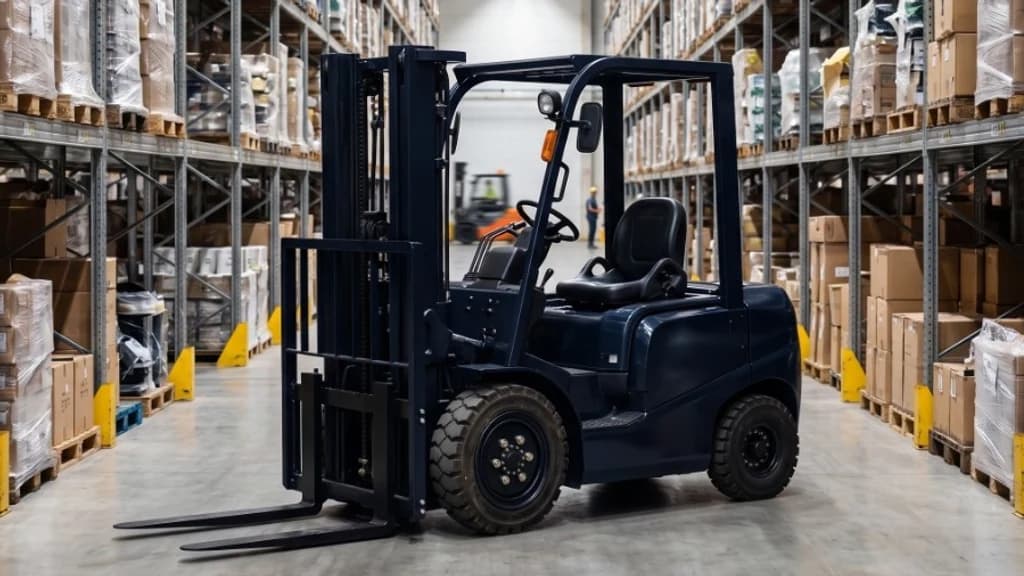
If your fleet runs two or three shifts, lithium almost always works out cheaper than lead-acid, even though it costs more upfront. If your forklifts run a single, light shift, lead-acid can still make sense. Anywhere in between, the answer comes down to your numbers.
In 2026, the question is no longer whether lithium works in a forklift. That has been proven in warehouses all over Europe. The real question is when switching pays off in your specific case.
The short answer: when each one makes sense
| Your situation | Most likely choice |
|---|---|
| 2 or 3 shifts a day | Lithium: no battery swaps, fewer charging hours |
| You keep spare batteries to swap between shifts | Lithium: with opportunity charging, one battery per truck is usually enough |
| You work in cold storage | Lithium, with a solution designed for low temperatures |
| 1 shift, light use | Either: it depends on your maintenance costs |
| Forklift near the end of its service life | Lead-acid: it's not worth investing in that truck |
If you recognise yourself in the first few rows, keep reading: the rest of this article explains why.
Upfront cost vs total cost of ownership
This is where most comparisons go wrong. If you only look at the purchase price, lead-acid wins every time, because a lithium battery costs more. But you don't buy a battery to sit on a shelf; you buy it to work for years. What matters is how much each hour of forklift operation really costs you.
That's why, according to NCPower's calculations, the total cost of ownership of a lithium battery is 25% to 35% lower than that of a lead-acid one, and the investment typically pays for itself within 18 to 24 months.
The hidden costs of lead-acid
A lead-acid battery comes with costs that never appear on the invoice, but that you pay every month:
- Watering and equalization charges, which take up staff time on a regular basis.
- A battery charging room: a well-ventilated area, because charging releases gases, taking up space you could use for storage.
- Spare batteries: in multi-shift operations you usually need more than one battery per truck, because a full charge typically takes around 8 hours plus cool-down time.
- Battery change time: every swap between shifts means downtime for both the truck and the person doing the swap.
- More frequent replacements: a lead-acid battery lasts fewer charge cycles than a lithium one, so it needs replacing sooner.
What you actually pay for with lithium
With lithium, the cost is concentrated upfront and drops sharply afterwards:
- No daily maintenance: no watering, no equalization charges.
- One battery per truck: it charges during breaks and shift changes, with no spare needed.
- Longer service life: far more charge cycles than lead-acid. The MH Series is rated for 3,000 cycles, compared with around 1,500 for a lead-acid battery.
- 5-year warranty on NCPower's MH Series.
Day-to-day performance in the warehouse
This is where operators notice the difference most.
With lead-acid, power drops as the battery discharges. By the end of the shift, the forklift lifts more slowly and has less pulling power. With lithium, voltage stays steady until the battery is almost empty, so the truck performs the same at 7 a.m. as it does at 3 p.m.
The other big difference is charging. Lead-acid needs long, full charges. Lithium supports opportunity charging: plugging the forklift in during coffee breaks, lunch or shift changes, even for a short time, without damaging the battery. In practice, this means a single battery can cover two or three shifts.
| Lead-acid | Lithium (LiFePO4) | |
|---|---|---|
| Power at end of shift | Drops | Steady |
| Charging | Long, full charge with cool-down | During breaks, without damaging the battery |
| Daily maintenance | Watering and equalization | None |
| Ventilated charging room | Required | Not needed |
| Batteries per truck (multi-shift) | Usually more than one | Usually one |
| Upfront cost | Lower | Higher |
| Total cost of ownership | Higher | 25–35% lower |
Maintenance and safety
A lead-acid battery contains sulphuric acid and releases gases while charging. That means careful handling, a ventilated area and trained staff to maintain it.
NCPower's lithium batteries use LiFePO4 chemistry, the most thermally stable of the lithium chemistries. They also include a BMS (Battery Management System), the electronics that monitor every cell and shut the battery down before anything goes wrong. NCPower's BMS is developed in-house by its own engineering team and uses three levels of safety alarms.
One detail that almost nobody explains: lithium weighs around 55% less than lead-acid. In a counterbalance forklift, the battery is part of the counterweight, so a lighter lithium battery would reduce lifting capacity. That's why batteries for counterbalance trucks are built with added ballast, to match the weight of the original lead-acid battery.
When lead-acid still makes sense
Not every fleet should switch to lithium tomorrow. Lead-acid is still a reasonable choice if:
- The forklift runs a single, light shift, and the current battery is in good condition.
- The truck is close to the end of its service life: investing in it doesn't pay off.
- The forklift is leased or rented, and the battery is covered by the dealer's contract.
If any of these apply to you, the sensible move is to stay with lead-acid and review the decision when your situation changes.
How to tell if switching pays off for your fleet
To run the numbers for your own operation, you need four things:
- Number of forklifts and type (counterbalance, reach truck, pallet truck…).
- Shifts per day and working days per year.
- Voltage of your current battery, shown on the battery's rating plate.
- What you spend today on maintenance, spare batteries and electricity.
With these, you can use our Lead vs Lithium Simulator.
What's next?
If your forklifts run multiple shifts, lithium will most likely be the more profitable option in the medium term. The next step is to check which battery fits your truck.
At NCPower, we manufacture lithium forklift batteries in Murcia, Spain, compatible with all major forklift brands. Send us the make, model and voltage of your forklift, and we'll tell you which battery it needs and how much you could save.